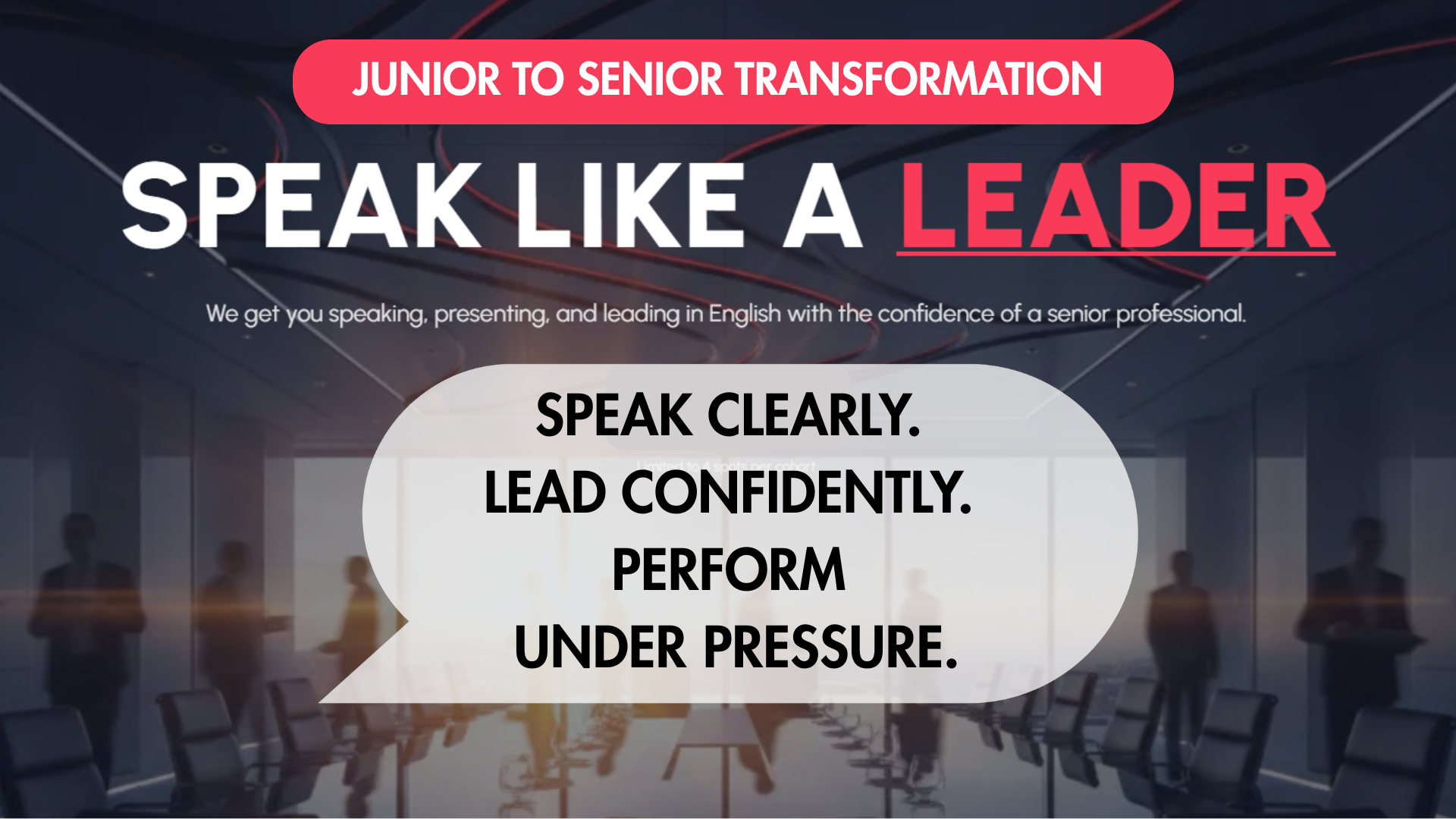
How to Build Confidence Speaking English Under Pressure
The Arena Phase: Why Real Growth Happens Under Pressure, Not in Comfortable English Exercises
Most Professionals Practise English in Safe Situations
This is one of the biggest reasons professionals feel:
confident during lessons
confident while studying
confident while preparing
…but freeze completely in:
meetings
interviews
presentations
leadership conversations
Traditional learning environments are usually:
predictable
controlled
slow-paced
low-pressure
Real professional environments are the opposite.
They are:
fast
unpredictable
emotionally charged
cognitively demanding
And this is exactly where communication breaks down.
Why Pressure Changes Everything
When professionals enter high-stakes situations, something interesting happens.
Their English level doesn’t disappear.
But their communication behaviour changes dramatically.
Under pressure, many professionals:
start translating mentally
lose structure
over-explain
hesitate before speaking
speak too fast
apologise excessively
forget simple words they already know
This is not a language issue.
It’s a performance issue.
Why “Comfortable Practice” Stops Working
Many professionals spend years:
studying grammar
watching videos
listening passively
reading articles
But very little time:
👉 performing communication under pressure.
This creates a dangerous gap:
Knowledge exists…
…but performance collapses when stakes increase.
This is why someone can:
understand everything
know the vocabulary
prepare perfectly
…and still freeze during a leadership meeting.
The Arena Is Where Real Communication Is Built
The final phase of Speak Like a Leader focuses on something most professionals rarely train:
👉 communication under realistic pressure.
Not theoretical exercises.
Not isolated grammar drills.
But:
simulations
leadership conversations
difficult questions
interruptions
spontaneous speaking
executive-style communication
Because this is where real transformation happens.
Why Simulations Work So Well
Your brain learns confidence through:
repetition
familiarity
emotional exposure
The more your brain experiences:
pressure
unpredictability
visibility
while remaining safe…
…the calmer it becomes over time.
This is why simulations are so powerful.
They create:
👉 evidence.
And evidence creates confidence.
Real Example: “I Knew the Answer… But Couldn’t Say It”
One professional described his experience perfectly:
“When I’m alone, I know exactly what I want to say. But in meetings, everything disappears.”
This happens constantly.
The issue was never:
intelligence
technical knowledge
vocabulary
The issue was:
👉 performing communication while under pressure.
Once he started training through simulations:
speaking became faster
ideas became clearer
panic reduced significantly
Not because his English became perfect.
Because his nervous system adapted to pressure.
The Difference Between Classroom English and Arena English
Classroom English often trains:
correctness
Arena English trains:
execution
That means learning how to:
answer difficult questions calmly
recover when stuck
structure ideas quickly
tolerate imperfection publicly
communicate despite pressure
This is a completely different skill set.
👉 Want to practise English in a way that actually reflects real professional pressure?
The final phase of Speak Like a Leader focuses heavily on simulations, leadership communication, and high-stakes speaking practice designed for real workplace situations.
You can explore the full program here:
Why Repetition Under Pressure Changes Identity
One of the most powerful effects of this phase is psychological.
At first, many professionals identify themselves as:
“bad at speaking”
“not confident”
“not fluent enough”
But after repeated exposure to realistic situations, something shifts.
They begin thinking:
“I can actually handle this.”
That changes:
posture
tone
speed
presence
willingness to participate
And over time:
👉 identity changes too.
Why Leadership Communication Requires Pressure Training
Leadership communication is not built in perfect conditions.
Real leaders must communicate:
when interrupted
when challenged
when uncertain
when under scrutiny
That’s why strong communication requires:
adaptability
recovery skills
calmness under pressure
—not perfection.
The Goal Is NOT Removing Nervousness
A lot of professionals think:
“I need to stop feeling nervous.”
But strong communicators are often still nervous.
The difference is:
👉 they can perform despite it.
That’s what training develops.
Why Professionals Become More Concise Under Pressure Training
An interesting thing happens during repeated simulations.
Professionals naturally begin to:
simplify
structure faster
speak more directly
eliminate unnecessary explanations
This creates:
stronger executive presence
clearer communication
calmer delivery
Ironically, pressure training often makes communication simpler and stronger.
Real Transformation Happens in Visibility
Many professionals avoid visibility because visibility creates discomfort.
But visibility is also:
where careers grow
where leadership develops
where opportunities appear
This is why the Arena Phase matters so much.
It trains professionals to:
👉 stay present while visible.
Questions About Communication Confidence
Why do I freeze in meetings even if I know English?
Because communication under pressure is different from passive knowledge.
How can I become more confident speaking English professionally?
Through repeated exposure to realistic speaking situations.
Why do simulations help communication?
Because they train the brain to stay calm under pressure.
Is confidence built through grammar study?
Not usually. Confidence grows through repetition, execution, and communication experience.
Final Thought: You Don’t Become Confident by Avoiding Pressure
You become confident by:
entering difficult conversations
speaking despite hesitation
surviving imperfect moments
repeating the process
That’s how communication transforms.
Not through perfection.
Through exposure.
Because eventually your brain stops saying:
“This is dangerous.”
And starts saying:
“I’ve done this before.”
That’s when professionals stop sounding hesitant.
And start sounding like leaders.
Ready to Train Communication Under Real Pressure?
If you want to:
improve your communication in high-stakes situations
feel calmer in meetings and presentations
strengthen your leadership presence in English
you can explore the full Speak Like a Leader program here: