Why Grammar Is Not the Real Problem in Professional English
Why Your English Problem Is Probably NOT Grammar (And What Actually Changes Careers)
The Biggest Myth in Professional English
For years, many professionals believe the same thing:
“Once my grammar is good enough, I’ll finally feel confident speaking English.”
So they:
study rules
memorise vocabulary
complete exercises
watch videos
collect certifications
And yet…
When the meeting starts:
they hesitate
overthink
lose structure
avoid speaking
sound uncertain
Why?
Because grammar was never the real problem.
The Hidden Trap of “Perfect English”
A surprising number of highly competent professionals are trapped in what I call:
👉 The Perfection Loop
The idea sounds logical:
“I’ll speak more once my English improves.”
But in practice, the opposite happens.
The more people wait for perfection:
the less they speak
the more pressure builds
the more intimidating communication becomes
Eventually English starts feeling like a test instead of a tool.
The Real Problem: Performance Under Pressure
Most professionals already know enough English for their jobs.
They can:
understand meetings
read documentation
write messages
follow technical discussions
But high-pressure situations expose something different:
👉 communication behaviour
That includes:
hesitation
weak structure
filler words
fear of interruption
difficulty expressing ideas clearly under pressure
And this has very little to do with grammar.
Think About This for a Moment
You probably know professionals who:
speak imperfect English
make grammar mistakes
have strong accents
…and yet:
lead meetings confidently
manage international teams
present ideas clearly
influence decisions
Why?
Because communication effectiveness is not the same as language perfection.
Why Technical Professionals Struggle More
Professionals in tech are often:
analytical
precise
detail-oriented
highly self-aware
These strengths become communication weaknesses under pressure.
Many professionals:
edit sentences mentally before speaking
search for the “perfect word”
restart sentences repeatedly
overcomplicate explanations
This creates cognitive overload.
The result?
Silence.
Hesitation.
Loss of confidence.
The Shift That Changes Everything
At some point, professionals stop focusing on:
“How do I improve my English?”
And start focusing on:
“How do I communicate clearly under pressure?”
This changes the entire learning process.
Instead of endless theory, the focus becomes:
structure
delivery
clarity
confidence
communication patterns
Why Structure Matters More Than Advanced English
Many professionals believe fluent communication means:
sophisticated vocabulary
complex sentences
sounding “native”
But senior communicators usually do the opposite.
They simplify.
They:
structure ideas clearly
get to the point faster
guide the listener
avoid unnecessary complexity
For example:
❌ “I was thinking maybe perhaps we could potentially evaluate…”
✔ “I see two possible options here.”
Simple.
Clear.
Confident.
👉 Want to understand which communication habits are actually holding you back?
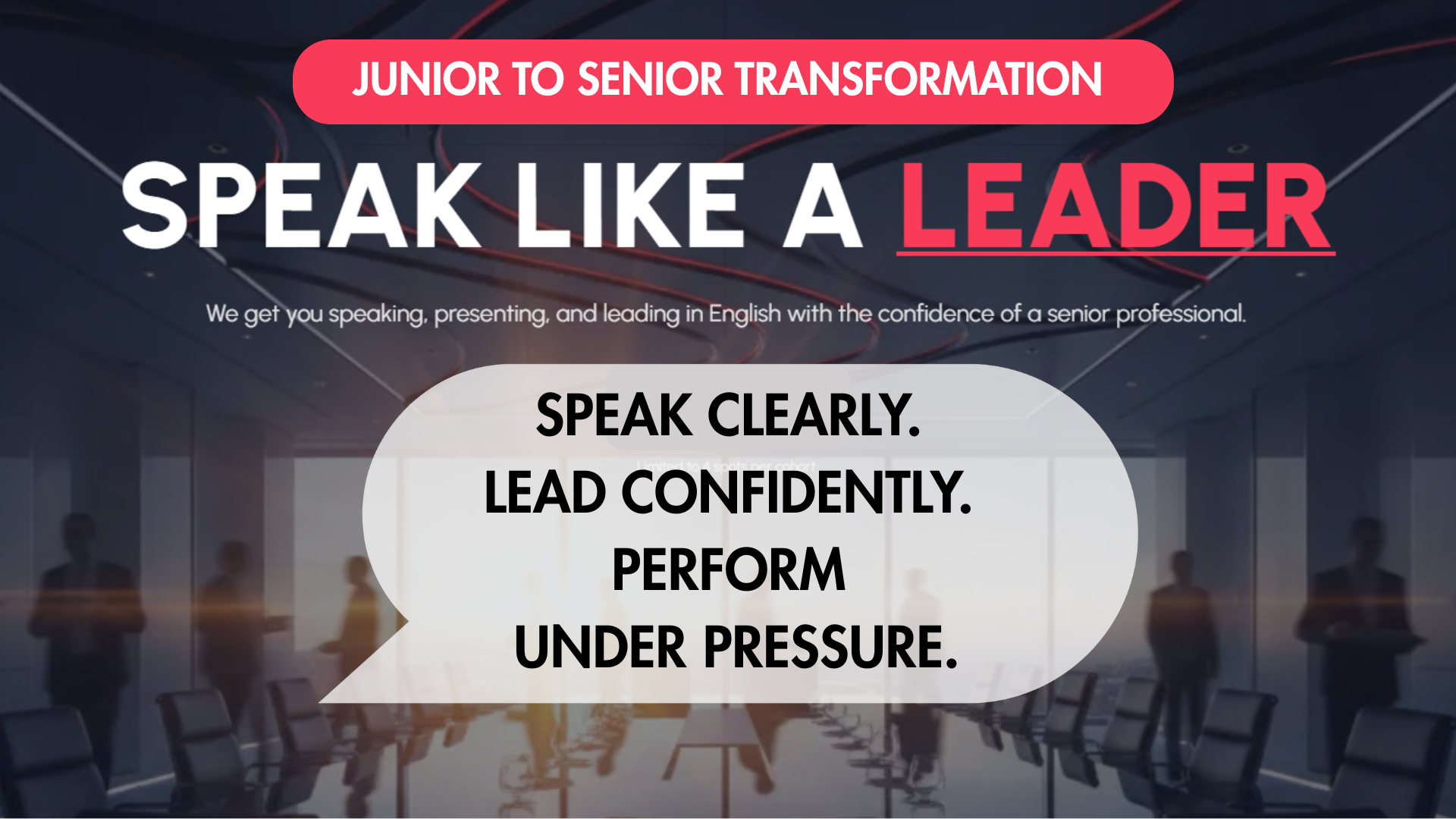
I created Speak Like a Leader specifically for professionals who already have strong technical expertise but want to communicate with more confidence, structure, and authority in English.
You can explore the program here:
Why Traditional English Courses Often Fail Professionals
Most English courses train:
language knowledge
But professional environments require:
communication performance
These are different things.
Knowing grammar rules does not automatically help you:
answer difficult questions
handle interruptions
present ideas calmly
lead conversations
improvise under pressure
That’s why many professionals feel:
“I know English… but I still struggle to speak.”
The Real Skill: Communicating While Thinking
In real conversations, you don’t have:
preparation time
perfect conditions
unlimited pauses
You must:
think
organise
speak
adapt
simultaneously.
This is a trainable skill.
But it requires:
repetition
simulations
guided practice
exposure to pressure
Not just grammar exercises.
Real Transformation Happens Through Communication Training
One professional I worked with had excellent grammar.
But during meetings:
he rambled
lost structure
apologised constantly
struggled to finish sentences clearly
The issue wasn’t language level.
It was communication control.
After working on:
structure
framing
concise communication
pressure management
his meetings changed completely.
Not because his English became “perfect”.
Because his communication became intentional.
Why Confidence Is Usually Built Backwards
Most people think:
confidence → speaking
But in reality:
speaking → confidence
Confidence grows from evidence.
Your brain becomes calmer when it recognises:
“I’ve handled situations like this before.”
That’s why repetition matters so much.
The New Perspective Most Professionals Need
Instead of asking:
“How can I sound more advanced?”
Ask:
“How can I communicate more clearly?”
That question leads to:
better meetings
stronger presentations
improved leadership presence
more visibility
And ironically…
clear communicators often sound more advanced anyway.
Questions About English Confidence
Is grammar the biggest problem for professionals speaking English?
Usually not. Communication under pressure is often the bigger challenge.
Why do I still hesitate even with good English?
Because speaking confidently requires communication training, not just language knowledge.
How can I sound more confident in meetings?
Focus on structure, clarity, and communication patterns instead of perfection.
Do I need native-level English for leadership roles?
No. Clear, confident communication matters far more.
Final Thought: Your Career Will Not Change Because of One Grammar Rule
It will change when:
your ideas become clearer
your communication becomes calmer
your leadership presence becomes stronger
you stop hiding behind perfectionism
Most professionals don’t need more English.
They need a better communication strategy.
Ready to Build Leadership-Level Communication in English?
If you want to:
stop overthinking
communicate more clearly
sound more confident in meetings
strengthen your leadership presence
you can explore the full program here: